In a world in which organizations are continuously looking for smarter, quicker, and more price-effective methods to perform, Software as a Service (SaaS) has emerged as the shining celebrity of cloud computing. Gone are the times of purchasing cumbersome software packages, installing them on every laptop, and hoping they don’t crash. Today, it’s all available on-demand, within the cloud, and without headaches.
Sounds like magic? Well, it’s not. It’s just SaaS, and it’s revolutionizing how we work.
What Exactly is SaaS?
Envision that you can use Netflix, Spotify, or Google Docs and not have to go through the setup steps or download anything. You can get everything you want quickly by going online. That’s exactly how software as a service cloud computing works.
Instead of paying a hefty premature rate for a conventional software program license, SaaS offers software on a subscription basis, hosted by third-party vendors within the cloud. You pay for what you operate, and the software is continually updated, secure, and available from anywhere.
Think of it as renting software rather than buying it; pay only for what you need and never worry about maintenance or updates again.
Why Do Businesses Need to Pay Attention to SaaS?
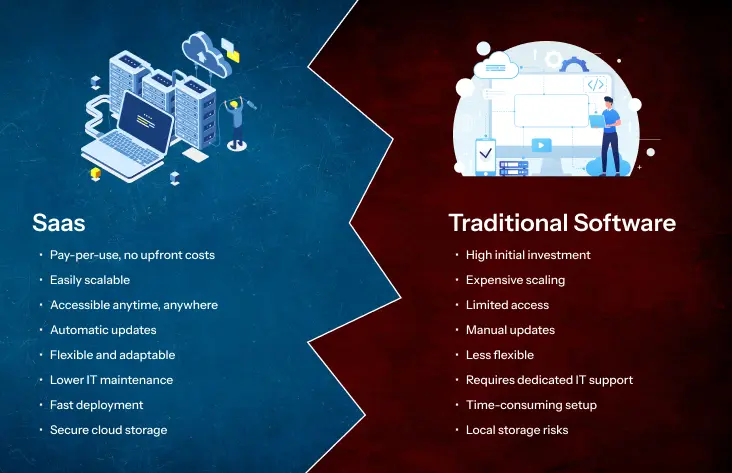
This is why so many businesses are choosing SaaS solutions more than ever:
- Save Money and Stay Calm
Consider getting rid of pricey upfront expenses for software, routine IT services and new hardware, helping your company save thousands (or even millions). Instead of traditional infrastructure, companies can rely on applications provided by the cloud. Pay-per-use? Yes, please! - Scaling up Easily
The use of SaaS varies from one company to another. As your company expands, the things you require will change as well. The greatest benefit is that. It is simple to manage your SaaS subscription, whether you are using more users, accessing new options or upgrading how much space you have. It works much better than a flexible wardrobe since you can use it as you change. - Any time and from any place
Individuals on your team can work with SaaS applications on any computer or handheld device. As long as you have access to the internet, it doesn’t matter if you are at work, at your house, or in Bali (enjoy!). You won’t have to worry about installing VPNs or old software on your computer. Click on the sign-in button and start your activities.
SaaS + Cloud Computing: A Match Made in Tech Heaven
SaaS isn’t simply a software program that’s available online. It’s built on cloud computing infrastructure, which means organizations can tap into a world of resources while not having to worry about preserving servers or coping with huge data storage.
If cloud computing is like the power grid, SaaS is the electricity running through it. Apps that run on the Software as a Service model, such as Netflix and Spotify, can be accessed from any location through the cloud. No downloads. No installation. Just easy and direct access to what you require.
SaaS in Action: Popular Examples You Know and Love
Still not satisfied? Let’s examine some Software as a Service superstars that you probably use every day:
- Salesforce: The CRM (Customer Relationship Management) tool that allows organizations to keep track of income, customer support, and advertising. Want to know which customer clicked on that email marketing campaign? Salesforce has you included. It’s the backbone of current sales teams.
- Google Workspace: You’re probably already using Gmail, Google Docs, and Google Drive. These gears are all part of Google Workspace, an exquisite SaaS suite that makes collaboration smooth. Edit files with colleagues in real time, share files, and talk at the same point on one platform.
- Shopify: If you’ve ever shopped online, probabilities are you’ve come across a Shopify-powered shop. It’s a SaaS platform that lets agencies without difficulty create and control their online shops. No coding knowledge is required—simply log in and start selling!
- Zoom: Have a meeting across time zones? Zoom’s SaSoftware as a Service aS platform has made far-flung meetings and video conferencing as smooth as urgent “Join.” Whether you’re web hosting a team assembly or catching up with a friend, Zoom’s SaaS solution guarantees every person remains related.
SaaS Is Changing How We Do Business
Now that we’ve seen a few real-world examples, let’s talk approximately how Software as a Service is revolutionizing commercial enterprise operations and creating possibilities that weren’t possible before.
- Boosting Productivity
Gone are the times of waiting for updates to finish downloading or for your IT department to repair a bug. SaaS apps are equipped to get up and running from the moment you sign up, with all updates and patches dealt with via the provider. This boosts productivity across the board; your team can be conscious of what topics are most important: getting things accomplished! - Security Done Right
It’s natural to worry about protection when you’re putting your commercial enterprise’s sensitive data in the cloud. But bet what? SaaS carriers are serious about maintaining your data safe. They invest heavily in pinnacle-notch encryption, multi-component authentication, and regular safety audits to make certain your data is in secure hands. Your records are more secure inside the cloud than sitting on your neighbourhood server. - Flexibility for Remote Work
Let’s face it: the pandemic changed everything. Companies shifted to remote work in a single day, and SaaS gear made that transition simpler than ever. Whether it’s a project management tool like Asana or a communication platform like Slack, SaaS tools keep teams connected, no matter where they are in the world. - The Right Tools for the Job
SaaS allows businesses to customize their technology stack with a variety of apps tailored to their specific needs. Want a SaaS app for accounting? There’s QuickBooks. Looking for an advertising automation device? Try HubSpot. With heaps of SaaS packages to choose from, businesses can select and pick out the best tools to optimize each department.
The Future of Software as a Service: Trends to Watch
SaaS is already wonderful. However, it’s most effective in getting better. Here are some trends to look out for:
- AI and Automation: As AI continues to develop, SaaS apps are becoming smarter. Tools powered by artificial intelligence can now expect purchasers to conduct and automate advertising tasks and even solve consumer queries without human intervention.
- Vertical Software as a Service: It’s important to note that traditional SaaS packages are designed for generalised applications. On the other hand, vertical SaaS focuses on specific niches, like healthcare, finance, or legal industries. These apps provide tailor-made features and compliance tools designed to fulfil the precise challenges of every enterprise.
- Low-Code/No-Code Platforms: These systems allow agencies to construct their own SaaS apps while not having a developer. With drag-and-drop capabilities, corporations can create custom answers that meet their precise desires.
- Enhanced Security Features: With growing cyber threats, SaaS companies are stepping up their safety features, enforcing encryption, issuing authentication, and compliance with rules like GDPR and HIPAA to protect sensitive business data.
Challenges and Considerations with SaaS Adoption
While SaaS gives numerous benefits, it’s not without its demanding situations. Here are some things corporations want to consider earlier than making the flow:
- Data Privacy Concerns: Storing sensitive data on a third-party provider’s cloud can increase privacy concerns. Businesses want to make sure that the SaaS issuer adheres to strict safety standards and offers transparent records and regulations.
- Vendor Lock-In: Once you’re incorporated into a specific SaaS platform, switching providers may be a hassle. Make sure to select a company that offers flexible contract terms and clear facts about portability alternatives.
- Integration with Legacy Systems: Many corporations nevertheless depend on legacy structures that might not, without problems, combine with new SaaS solutions. Make sure to assess how, without problems, your present infrastructure can connect with new SaaS apps to keep away from disruptions.
Conclusion: Embrace the Future with SaaS
Software as a service cloud computing isn’t just the destiny, it’s the present. With its capacity to streamline operations, enhance collaboration, and reduce prices, SaaS is supporting corporations to achieve their dreams faster and greater effectively than ever earlier. The destiny is digital, and SaaS is at the coronary heart of that transformation. So, whether or not you’re a small startup or a massive business enterprise, it’s time to embrace SaaS and liberate your business’s complete potential.
Ready to make the switch? The cloud is waiting for you!

 By
By
 By
By