1
Discovery and Alignment
Identify business goals, user needs, and current challenges in your product lifecycle.

Enhance your team's efficiency and adaptability with Agile frameworks tailored to your needs. Leverage
Scrum, Kanban, and Scrumban to optimize workflows and deliver consistent value.
The Agile Operational Framework for Product Engineering is a systematic approach designed to optimize every stage of your product development journey. From ideation to deployment, this framework ensures your teams work collaboratively, deliver rapidly, and adapt seamlessly to change.

Faster Time to Market
Minimize delays and bring innovative products to customers sooner.
Higher Product Quality
Leverage iterative development cycles to refine features and reduce defects.

Customer-Centric Development
Continuously gather and implement customer feedback to build products users love.
Team Empowerment
Foster a culture of collaboration, ownership, and innovation within your engineering teams.
Lorem ipsum dolor sit amet consectetur. Eu fermentum adipiscing euismod donec eleifend.
Choose the right agile approach—Scrum, Kanban, or SAFe—based on your team’s needs.
Streamline product releases with automated pipelines that ensure quality at every step.
Break down silos between design, development, testing, and deployment teams.
Track progress with clear KPIs like velocity, cycle time, and defect density to guide improvements.
Whether you're a startup or an enterprise, scale seamlessly as your teams and projects grow.
Utilize agile tools and dashboards to provide stakeholders and teams with a clear, real-time view of project progress and bottlenecks.
Lorem ipsum dolor sit amet consectetur. Etiam mauris leo.
Identify business goals, user needs, and current challenges in your product lifecycle.
Craft a customized agile framework that aligns with your product engineering requirements.
Equip your teams with agile principles, tools, and techniques to ensure smooth adoption.
Conduct regular retrospectives and feedback sessions to iterate and improve processes.
Monitor KPIs, resolve roadblocks, and adapt the framework as your needs evolve.
Scrum is a time-boxed Agile framework focusing on delivering value through iterative development. Teams work in sprints, typically 1-4 weeks long, to achieve specific goals. Each sprint includes:
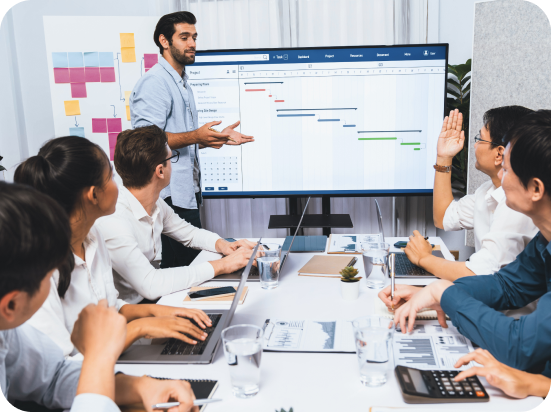

Kanban is a visual Agile framework designed for continuous delivery and workflow optimization. It emphasizes limiting work-in-progress and improving efficiency through:
Scrumban combines the structure of Scrum with the flexibility of Kanban for hybrid agility. It uses time-boxed iterations while optimizing workflow through:

Our SaaS solutions cater to a wide range of industries, including:

Accelerate feature delivery and improve scalability.
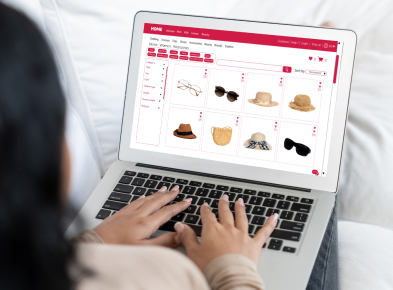
Build responsive, customer-focused platforms and features.

Create secure, robust products for dynamic financial environments.

Develop high-quality, compliant solutions quickly.

Build scalable, interactive platforms for modern learning.
Transforming Product Engineering with Agile
Delivered a fully functional MVP in just 8 weeks.
Reduced defect rates by 30% and improved delivery times by 40%.
Built and deployed a personalized shopping engine within three months.