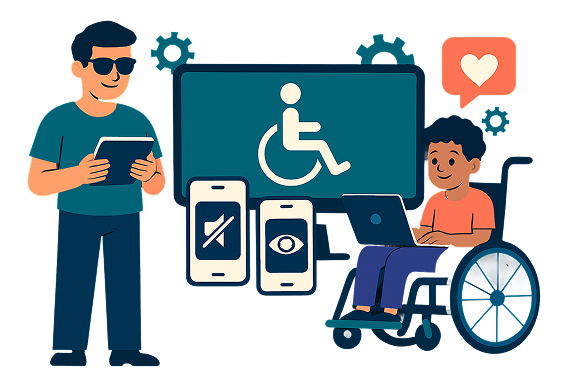
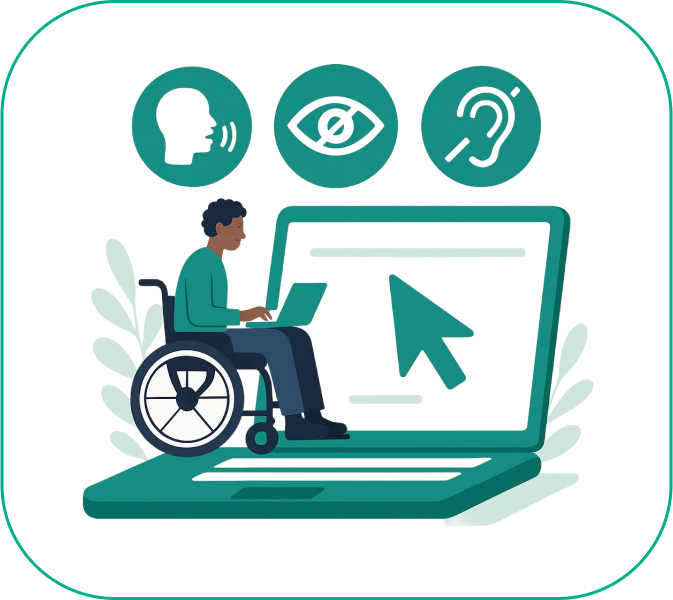
WCAG Compliance Image

What is WCAG Compliance?

WCAG Compliance ensures your digital product meets the Web Content Accessibility Guidelines, making your website usable for all audiences, including people with disabilities. At Metizsoft Inc., we integrate accessibility early in the product engineering process so your platforms are inclusive, user-friendly, and aligned with modern accessibility expectations.

Our approach goes beyond basic checks or an Accessibility Audit. We embed ADA Web Accessibility principles, structured navigation, readable content, and assistive-technology support directly into your design and development workflows. The result is an accessible website that reduces compliance risks, improves usability, and supports long-term scalability.


Who Needs WCAG Compliance?

E-commerce ADA Accessibility

Government Section 508 Compliance

Healthcare Website Accessibility Audit

Education EN 301 549 Compliance

Financial Services WCAG Compliance

Media & Publishing ADA/WCAG

We focus on delivering accessible solutions that provide equal digital access for all users.

WCAG Compliance Solutions – Core Accessibility Features

Below are the essential accessibility standards we integrate into every product to ensure ADA-compliant, user-friendly, and fully WCAG-compliant digital experiences.

Perceivable & Accessible Content

We ensure all content meets WCAG perceivability requirements through proper text alternatives, meaningful captions, readable typography, high-contrast color palettes, and adaptable layouts. This guarantees that users with visual or auditory disabilities can access every part of your website.

Keyboard Operability & Inclusive Navigation

Our ADA Web Accessibility approach ensures all interfaces work seamlessly via keyboard navigation. We implement clear focus states, logical tab order, and operable controls so users with motor or mobility impairments can navigate your platform without barriers.

Understandable Content & Predictable Interactions

We refine content and interface behavior to meet WCAG understandability rules—using simple language, consistent navigation patterns, helpful instructions, and error identification. This supports users with cognitive or learning disabilities and improves overall usability for everyone.

Robust Compatibility Across Devices & Assistive Tech

We build solutions that maintain compatibility with assistive technologies such as screen readers, magnifiers, speech input tools, and alternative browsers. Following WCAG Guidelines ensures your digital product stays accessible and functional across evolving technologies.

Accessibility Testing & Validation

Our WCAG Compliance process includes automated scans, manual accessibility audits, and real-user testing to identify and resolve accessibility issues early. This ensures continuous ADA Web Accessibility compliance and validates performance against recognized accessibility standards.

Accessibility Training & Team Awareness

We provide hands-on training and documentation for design, product, and development teams. This empowers your organization to maintain Accessible Website practices, follow WCAG Guidelines consistently, and build inclusive digital experiences long-term.

Accessibility isn’t an afterthought — it’s integrated throughout your product’s design and code.

Why WCAG Matters for Your
Business?

Expand your audience by including users with disabilities

Meet legal accessibility requirements (ADA, Section 508, EN 301 549)

Improve SEO and overall user experience for everyone

Demonstrate social responsibility and brand leadership

Reduce the risk of lawsuits and regulatory penalties

What Happens If You Don't Meet WCAG Compliance?

Ignoring ADA Web Accessibility Can Lead to Serious Business Risks

Legal actions, ADA lawsuits, and costly settlement fees

Loss of customers due to inaccessible or frustrating user experiences

Damage to brand reputation and long-term trust

Exclusion of users with disabilities reduces the overall audience reach

Barriers to government contracts and accessibility-required partnerships

Don’t let inaccessible design hold your business back.

border line

WCAG Principles We Follow

Perceivable

Information and UI must be presented so users can perceive it (e.g., alt text, captions).

Operable

Users must be able to interact with all controls and navigation via keyboard or assistive tech.

Understandable

Content and interface behavior must be clear and predictable.

Robust

Content must work reliably across browsers and assistive technologies.

Our solutions rigorously align with WCAG 2.1 Level AA standards - the current industry benchmark

border line

Our WCAG Compliance Framework

We don’t just meet standards; we create products usable by all.

pci framwork user
  • Infrastructure

    Accessible-ready frameworks and tools

  • Dev Team Training

    Ongoing accessibility education for designers and developers

  • Documentation

    Accessibility statements, user guides, and audit reports

  • Continuous Monitoring

    Manual and automated testing with diverse user groups

  • Secure Deployment

    Integration of accessibility checks in CI/CD processes

Does Your Product Need WCAG Compliance?

If your application or service does any of the following, WCAG compliance is mandatory:

  • Provides public or commercial services online

  • Receives government funding or contracts

  • Targets users in regulated industries (education, healthcare, finance)

  • Aims to be inclusive and user-friendly for all audiences

Need wcag Compliance

Not sure where you stand? We offer thorough accessibility assessments and roadmaps.

Frequently Asked Questions

Check out these FAQs to learn more about how our WCAG compliance services can benefit you.

What is WCAG Compliance?

WCAG Compliance means your website follows the Web Content Accessibility Guidelines, ensuring digital accessibility for all users, including individuals with visual, auditory, cognitive, or motor disabilities. Meeting WCAG guidelines also improves usability, conversion rates, and overall user experience.

Why does ADA Web Accessibility matter?

ADA Web Accessibility helps businesses meet legal requirements, reduce the risk of lawsuits, and deliver equal access to all users. It also improves SEO performance, customer satisfaction, and brand reputation by ensuring your website works seamlessly for everyone.

Who needs to follow WCAG guidelines?

Government bodies, educational institutions, public sector organizations, private companies, and e-commerce businesses all need to align with WCAG if they provide digital content to the public. These guidelines ensure equal access for every user, including those with disabilities.

What are the different WCAG levels (A, AA, AAA)?

  • Level A: Minimum level of accessibility.
  • Level AA: Addresses the biggest barriers for users with disabilities (most commonly targeted standard).
  • Level AAA: Highest level of accessibility, but not always feasible for all websites.

Is WCAG compliance mandatory?

In many countries, yes. Laws like the ADA (Americans with Disabilities Act) in the US, EN 301 549 in the EU, and Accessibility for Ontarians with Disabilities Act (AODA) in Canada require digital accessibility, often aligned with WCAG.

Does WCAG Compliance help with ADA, Section 508, and EN 301 549 requirements?

Yes. WCAG Compliance forms the foundation for ADA Web Accessibility, Section 508 Compliance for government-related services, and EN 301 549 Compliance for EU accessibility standards. Meeting WCAG ensures your website aligns with multiple international accessibility laws.

How often should WCAG compliance be reviewed?

It’s recommended to review and update accessibility every time you make significant changes to your website, or at least annually, to ensure ongoing compliance.

Does WCAG compliance affect SEO?

Yes. Accessible websites are more search engine-friendly. Clear headings, alt tags, semantic HTML, and faster load times improve both SEO performance and user experience.

What happens if my website is not WCAG compliant?

You risk legal action, loss of reputation, and exclusion of users with disabilities. Non-compliance can result in lawsuits, especially under the ADA or similar international laws.

How do I make my website WCAG compliant?

Achieving WCAG compliance involves several steps:

  • Conduct a full accessibility audit.
  • Fix errors related to color contrast, navigation, forms, and media.
  • Implement ARIA roles and semantic HTML.
  • Train your team on accessibility best practices.
  • Perform regular testing with assistive technologies.

Get Started with WCAG Compliance Experts

Partner with Metizsoft Inc for trusted WCAG Compliance solutions, ADA Web Accessibility services, and thorough Accessibility Audits.

Book a free consultation and guarantee inclusive, accessible web experiences.

Or reach us at:connect@metizsoftinc.net