Today, in a cloud-first world, cloud computing is not only a technology decision; it’s a strategic decision! The cloud allows companies of all sizes to become more flexible, encourage new ideas, and cut expenses. However, choosing between software as a service vs platform as a service can make you feel overwhelmed. You could ask: What makes these approaches different? Additionally, what type of cloud computing best fits my business’s needs?
Let me outline these cloud service models to help you decide your needs. We’ll study their capabilities, difficulties, and the practical effects they can have on your business.
What Is SaaS? A Game-Changer for Instant Productivity
You can start using SaaS software almost immediately. It’s much easier than setting up everything manually; just sign up, enter your account, and start using the system. You won’t have to download software or go through any tricky setup. This allows your business to spend less time dealing with IT and more on its goals.
SaaS is ideal for those who want something that operates effectively from the beginning. The provider is responsible for applying updates, running maintenance, and handling security, so there’s no worry for you. All the latest updates come to you without any effort from your part.
For example, with tools such as Google Workspace and Microsoft 365, working from home has become both possible and. Thanks to Salesforce, tracking leads in sales can be simple, and now everyone uses Zoom for online meetings. Batch SaaS platforms enable you to handle your business activities faster and more securely from any location.
What Does PaaS Mean? Allowing Many Custom Options and New Technologies
We will now look at PaaS. With PaaS, you’re provided with the means to build your applications, not just given ready ones. You can use a cloud environment for development, and the provider will handle all the servers, storage, middleware, and necessary tools. Since you don’t need to be concerned about the infrastructure, you can focus on developing new solutions.
If you’re inspired to make custom solutions, PaaS offers endless possibilities. This means developers can write code, deploy their apps, and improve their work quickly without focusing on hardware details. Adapting this way significantly shortens your time getting new ideas on the market. Launching applications that adapt to your company’s growth is now easier because of platforms such as Heroku and AWS Elastic Beanstalk.
Software as a Service vs Platform as a Service and What’s in It for You
Knowing the fundamental differences between SaaS and PaaS helps you choose the best technology for what you are trying to achieve with your business.

- Users: SaaS benefits people like sales professionals, marketers, and workers in finance because it provides software that is ready out of the box. PaaS is suitable for people who want to create and shape their applications.
- Customization: SaaS gives you less ability to change things but offers a cleaner and easier solution. When you use PaaS, you have control over deciding how your app will work so that you can customize it.
- Maintenance: The SaaS company handles both your infrastructure and all required updates. While the infrastructure is managed with PaaS, you must still look after and grow your application.
- Deployment & Scalability: SaaS software is deployed without delay and can handle increasing users independently. It is possible to scale infrastructure with PaaS platforms; however, managing and deploying things is necessary.
- Pricing: In SaaS, you usually pay for use regularly, whereas PaaS typically bills you for how much storage and processing power you use.
Knowing these differences means you can match your cloud strategy to your business needs.
What Benefits Does This Have for You?
You shouldn’t judge SaaS or PaaS solely on how “great” they are. It means selecting a home that is right for what you need now and what you plan to need in the future. If you are looking for a low-cost, easy solution to improve how your team handles daily business duties like email, teamwork, or managing customers, choosing SaaS is probably best. It allows you to experiment and build exactly what your business needs without the overhead of managing physical servers.
PaaS could help most if you create customizations, including new features, or enable your team to do so with maximum flexibility, effectively letting you choose the best setup for your company, without worrying about running and maintaining physical hardware.
Selecting the right option at this stage can determine whether your company succeeds rapidly or meets challenges. It’s important not to go for the incorrect cloud model, considering the right one can speed up digital progress and help you remain competitive.
Real-World Examples That Show How SaaS and PaaS Work
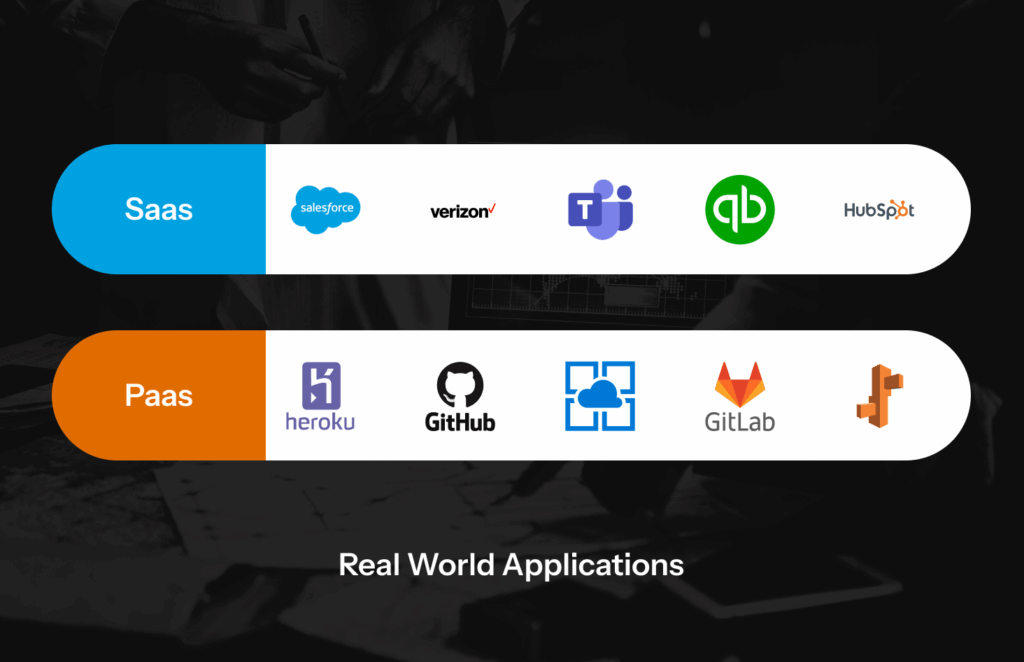
To put this into perspective, let me share some scenarios where these cloud models shine.
SaaS examples:
- A sales team using Salesforce CRM to effortlessly track and manage leads without needing their IT team.
- Remote teams are collaborating smoothly via Microsoft Teams or Slack.
- Finance departments handle real-time accounting and compliance through QuickBooks Online.
PaaS examples:
- Startups use Heroku to rapidly build and iterate on new apps without worrying about servers.
- Large companies are developing complex API-driven integrations on Azure App Service to connect their systems.
- IoT developers are deploying scalable backends on AWS Elastic Beanstalk to handle vast volumes of device data.
The Benefits You Can Count On
I’ve seen SaaS bring: instant access to powerful tools, less IT overhead, predictable subscription costs, and continuous updates that improve your experience over time.
With PaaS, you gain accelerated development cycles, flexibility to use multiple programming languages and frameworks, collaboration capabilities for teams anywhere, and scalable infrastructure that your provider manages.
Challenges You Should Keep in Mind
No cloud solution is perfect. With SaaS, you may face limited customization options and sometimes worry about security since your data is stored on external servers. Integration with your existing systems can also be challenging.
PaaS users, including myself, have to watch out for vendor lock-in. Moving your applications to another platform down the road can be complicated. Moreover, it usually takes time for developers to understand the platform’s conditions and restrictions.
What Will Come Next for SaaS and PaaS?
So, in a debate of software as a service vs platform as a service, I’m convinced that SaaS and PaaS will continue to grow. Software as a Service Solution providers will improve personalization by using AI and machine learning to meet your needs. Low-code and no-code options will allow everyone to develop robust applications without special technical knowledge.
The combination of SaaS and PaaS is working towards improving innovation and making cloud services more accessible, scalable, and easily customized for all businesses.
Final Thoughts
SaaS is designed to help you quickly address your short-term issues with software that does the work for you. PaaS allows developers to work on the next generation of technology.
Therefore, consider what your business requires, what you plan to do in the future, and your available resources when choosing. Choosing this platform is about helping your business to grow, handle things more wisely, and remain ahead of competitors online.

 By
By
 By
By