In the fast-paced world of Digital Product Engineering, a revolutionary approach is reshaping how companies operate and scale: Operations as a Service (OaaS). OaaS is fast becoming the backbone of modern digital enterprises. It promises to increase agility, save on costs, and streamline workflow, making it a must strategy for modern enterprises. In today’s blog, we’re going to dive deep into one of the most powerful game-changing dynamics that are changing the product engineering services companies way of delivering value.
Era of Operations as a Service
Remember when operations meant maintaining physical infrastructure and managing on-premise systems? Those days are rapidly fading into history.
Digital product engineering today requires innovative thinking. Operations as a Service moves away from traditional fixed processes to more flexible, scalable, and expert-driven models. These new approaches meet the changing needs of modern businesses
Understanding Operations as a Service
OaaS allows you to get a world class operations team without having to actually build one yourself. Our solution handles your operations for you, letting you focus on your strengths while dedicated experts manage the rest. This works well for companies that want reliable operations without the extra workload.

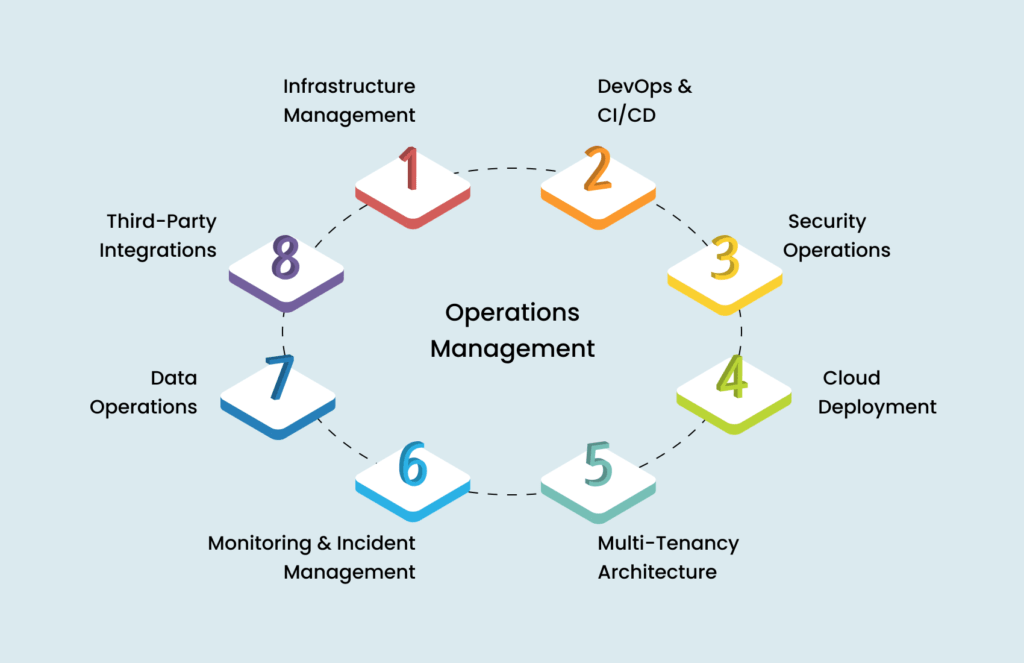
The scope of OaaS encompasses several critical areas that form the foundation of modern digital operations. Infrastructure management stands at the forefront, with providers offering sophisticated cloud infrastructure optimization and automated scaling solutions. DevOps and CI/CD services ensure smooth deployment pipelines and efficient code management while robust security operations protect valuable assets and maintain compliance. Performance optimization and data operations round out the core offerings, ensuring that applications run efficiently and data flows seamlessly through the organization.
What Services Come with OaaS?
Operations as a Service (OaaS) contains a comprehensive range of services aiming at all the urgent needs of contemporary businesses. OaaS can be customized to meet needs with specific goals, thereby making it a flexible solution for organizations to streamline their operations, keeping everything reliable, scalable, and compliant. Below is a detailed breakdown of the key services offered by OaaS providers:
Infrastructure Management
OaaS is backed by the efficient infrastructure management. Its main purpose is that your digital environment always runs smoothly and is resilient to disruptions.
- Cloud and On-Premise Management: It efficiently provides and manages both on-premise and cloud infrastructure so the performance is optimal and cost-effective.
- Scalability and Optimization: Automated scaling solutions scale-out in response to variations in the workload, so workloads are never being overused or underused.
- High Availability: Through OaaS, the downtime is minimized, keeping a robust and reliable infrastructure.
- Disaster Recovery: Disaster recovery solutions are implemented by product engineering companies to protect data and to keep business running when unexpected events take place.
Multi-Tenancy Architecture
Multi-tenancy architecture makes resource allocation and process management highly efficient for businesses in shared environments.
- Accelerated Deployment Cycles: OaaS helps speed up release cycles with fewer errors by means of using Continuous Integration and Continuous Deployment (CI/CD) pipelines.
- Automation: Automated workflows remove manual intervention and reduce the effort in deploying Proof of Concept to accelerate the cycle times.
- Resource Optimization: The product engineering services company also guarantees fair and efficient distribution of resources among tenants and proceeds to minimize conflicts and maximize performance.
Third-Party Integrations
Seamless integration with external systems is vital for smooth operations. OaaS product engineering companies simplify this process while maintaining security and compliance.
- Connectivity: Providers establish and maintain seamless communication between your existing systems and third-party platforms, ensuring efficient data exchange.
- Data Security: OaaS solutions emphasize secure data transmission, protecting sensitive information from potential threats.
- Compliance Standards: Integration solutions adhere to industry-specific regulations and compliance standards, reducing risks and ensuring accountability.
Cloud Deployment
Cloud deployment services are created to help companies unleash the full power of cloud computing.
- Cloud-Native Solutions: Scalable and flexible cloud-native architectures are implemented by product engineering companies tailored to your specific needs.
- Proactive Monitoring: It ensures system operation all of the time and any problems are addressed promptly.
- Incident Management: Incidents with minimal impact on business operations are handled by dedicated short-term teams to facilitate continuity and reliability.
Agile-Driven Operations as a Service Framework
Incorporating Agile methodologies into the Operations as a Service model is revolutionizing how operations are managed. Agile-driven OaaS prioritizes adaptability, collaboration, and continuous improvement, ensuring that operational services align with dynamic business needs. Here’s how an Agile OaaS Framework functions:
- Iterative Service Delivery:
OaaS providers deliver incremental improvements to operations, ensuring quick wins and measurable progress. - Cross-Functional Collaboration:
Teams from both the client and the OaaS provider work collaboratively to align operational goals with business objectives. - Feedback Loops:
Regular feedback ensures continuous improvement and fine-tuning of services. - Scalability with Agile Sprints:
Services are scaled and adjusted in real time to meet project demands, ensuring optimal performance.
Startups vs. Established Enterprise OaaS
Operations as a Service can have transformative benefits for organizations. However, the approach taken to providing services to startups and established enterprises can differ greatly. Here’s a closer look at how OaaS caters to the unique needs of these two types of businesses:
For Startups: Driving Agility and Reducing Overheads
As a startup, you often operate in high-pressure environments where resources are scarce, but you need to be agile and cost-efficient. OaaS offers several advantages tailored to their needs:
- Cost-Effective Operations:
This helps startups without the high costs of hiring, training, and maintaining a dedicated operations team. OaaS gets rid of upfront investment in infrastructure to access world-class expertise. - Faster Time to Market:
This allows startups to do their easiest product development while outsourcing operationalized tasks. This enables them to get to market faster than competitors while also leading the pack. - Scalability:
Rapid growth is common for Startups. OaaS makes it possible for them to scale operations without thinking about infrastructure limitations on them or hiring more people. - Focus on Core Competencies:
Startups can focus on innovation, engagement, and early-stage success, the work that is needed for success, without worrying about operational concerns that OaaS providers address. - Access to Advanced Tools:
The idea behind Operations as a Service, on the other hand, is to give startups access to the latest cutting-edge tools and technologies that they may not be able to afford to build themselves, like AI-driven monitoring, cloud-native solutions, and advanced DevOps practices.
For Established Enterprises: Enhancing Efficiency and Driving Innovation
With larger, more established businesses, the main objectives are to optimize existing processes as much as they can, improve efficiency, and retain a competitive edge. OaaS helps them achieve these objectives in the following ways:
- Streamlined Operations:
OaaS-providing product engineering companies benefit enterprises with complex legacy causes that modernize using OaaS providers to make the operations better working, having reduced downtime, and improved reliability. - Flexibility in Scaling:
For established enterprises, demand varies to a varying degree. Dynamic scaling of resources makes OaaS the most efficient way to pay for only those resources you need when you need them during peak and off-peak periods. - Support for Digital Transformation:
A lot of enterprises are digitally transforming. OaaS promotes this transition and helps you with its expertise in cloud migration, DevOps implementation, and automation. - Global Compliance:
Many large businesses have business and compliance standards across multiple geographies. Such OaaS providers ensure compliance with regulations such as ISO, GDPR, and HIPAA.

Driving Innovation: Outsourcing of operational complexity frees resources and talent for the development of products and services.
Navigating Challenges in Operations as a Service Implementation
The benefits of Operations as a Service are obvious. However, implementation isn’t as easy as it may seem. Key concerns include security and compliance, making them often the top list when talking about OaaS. These concerns are addressed successfully by successful providers via comprehensive security, including zero trust models, regular audits, and automated policy enforcement. Data is protected end to end across its lifecycle.
Integration complexity presents another significant challenge. Connecting Operations as a Service solution with existing systems requires careful planning and execution. The most successful implementations rely on standardized APIs and protocols, coupled with a phased approach that allows organizations to maintain stability while transitioning to new operational models.
Performance monitoring across distributed systems can also prove challenging. Modern OaaS solutions address this through unified monitoring platforms that provide real-time visibility into all aspects of operations.
Conclusion
Operations as a Service (OaaS) is not a passing trend; it’s a disruptive force reimagining business operations in today’s age. OaaS is a way for startups and enterprises to leverage efficiency, innovation, and growth. Organizations that embrace this model can create new opportunities, remain competitive, and thrive in a fast-changing world.
The question is no longer ‘Should we adopt OaaS,’ but how quickly businesses can embed it into their operational strategies to maximize the major opportunities it brings.

 By
By
 By
By