
Power Apps vs Custom App: Which One Is Better for Business Applications?
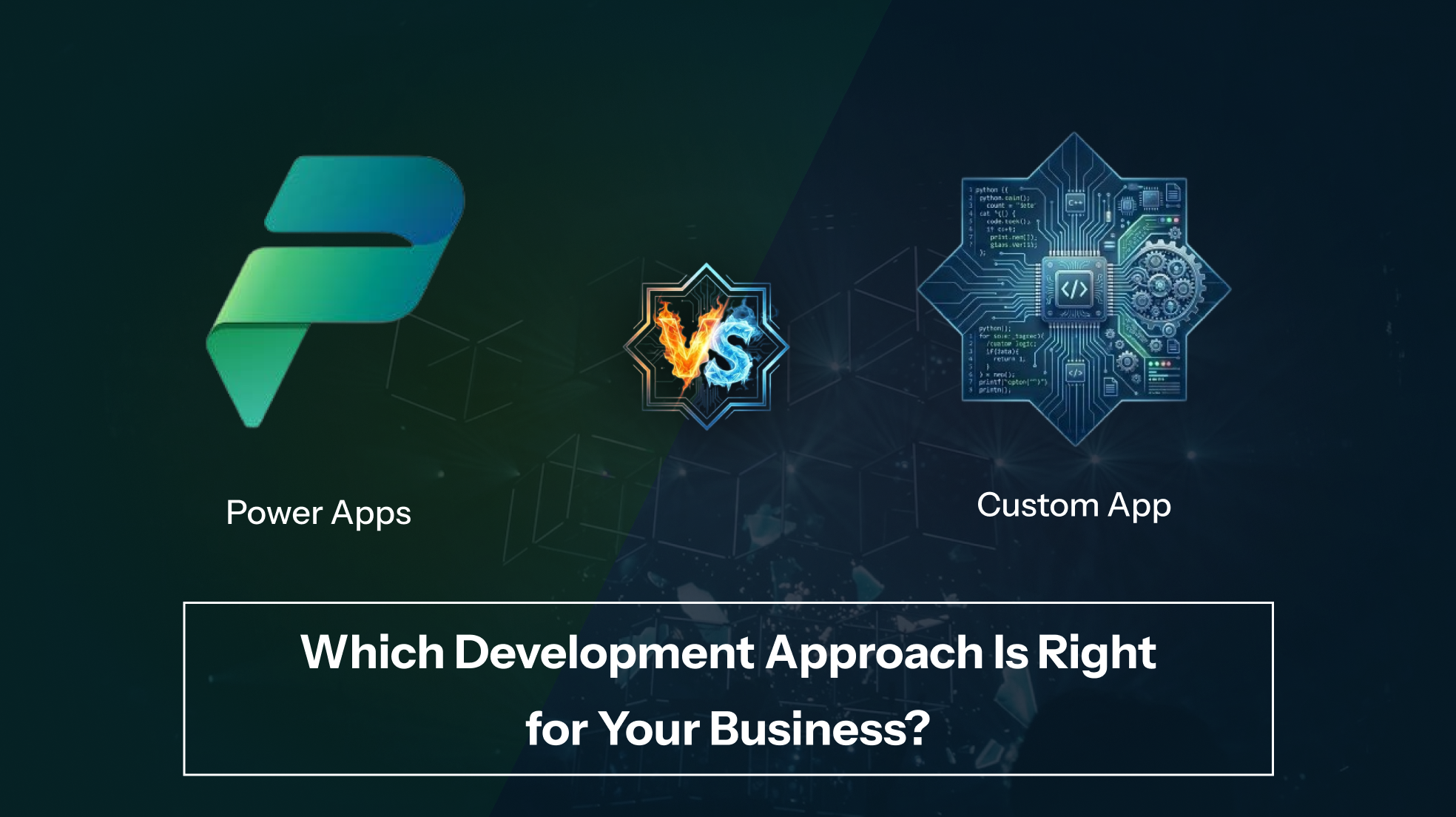
Businesses today rely on digital applications to improve operations and deliver better customer experiences. However, many organizations face an important decision: Power Apps vs Custom App development. Both options offer different advantages depending on business needs.
When companies compare Power Apps vs Custom App, they usually consider development speed, cost, flexibility, and long-term scalability. Choosing the right approach can significantly impact operational efficiency and digital transformation success.
You’ve probably experienced that moment. A headline pops up about another company being hacked. Another story surfaces about a business facing a huge fine. And somewhere in the back of your mind, a question appears: could this happen to my business? Is my data really secure?
Understanding the differences between Power Apps vs Custom App solutions helps business leaders select the most suitable technology for their applications.
Power Apps vs Custom App: Understanding the Core Differences
What Is Microsoft Power Apps and How It Works
Microsoft Power Apps is a low-code platform that allows businesses to build applications quickly. It provides visual tools that simplify application development.
Users can design forms, workflows, and dashboards without deep coding knowledge. Power Apps also integrates easily with Microsoft services such as Microsoft 365, SharePoint, and Dynamics.
Because of its simplicity, Power Apps is widely used for internal business tools.
What Is a Custom Business Application
A custom application is software built from scratch using programming languages and development frameworks. These applications are designed specifically for unique business requirements.
Developers create custom apps using technologies like JavaScript, .NET, Python, or Java. This approach provides full control over features, user experience, and system architecture.
Custom development is commonly used for complex platforms and customer-facing products.
Why Businesses Compare Power Apps vs Custom App Solutions
Organizations often evaluate Power Apps vs Custom App options when planning new business applications.
The decision usually depends on several factors:
- Development speed
- Budget availability
- Required customization
- Integration requirements
- Long-term scalability
Understanding these factors helps businesses choose the right development approach.
Key Comparison of Power Apps vs Custom App Development
Development Time and Speed
One major difference in Power Apps vs Custom App development is speed.
Power Apps allows businesses to create applications within days or weeks. Low-code tools simplify development and reduce technical complexity.
Custom development typically takes longer. Building a complete application from scratch can require several months depending on complexity.
Cost and Budget Considerations
Cost is another important factor when comparing Power Apps vs Custom App solutions.
Power Apps often requires lower upfront investment. Businesses mainly pay for platform licensing and basic configuration.
Custom development usually involves higher costs because it requires experienced developers, longer development cycles, and ongoing maintenance.
Flexibility and Custom Features
Power Apps provides many built-in components that support common business scenarios. However, customization options can sometimes be limited.
Custom applications offer complete flexibility. Developers can build unique features and advanced workflows tailored to specific business needs.
Organizations requiring highly specialized functionality often prefer custom development.
Integration with Existing Systems
Integration plays a key role in modern business applications.
Power Apps integrates smoothly with Microsoft services and many cloud platforms. Built-in connectors simplify integration with databases, APIs, and enterprise systems.
Custom apps also support integration but may require additional development work to connect with different platforms.
Scalability for Long-Term Business Growth
Scalability is essential for companies planning long-term digital growth.
Power Apps works well for internal tools and moderate-scale applications. However, extremely complex or high-traffic systems may require custom architecture.
Custom applications allow organizations to design scalable systems that support millions of users and complex operations.
Power Apps vs Custom App Comparison Table for Businesses
Feature-Based Comparison
| Feature | Power Apps | Custom App |
| Development Speed | Very fast development using low-code tools | Slower development due to full coding |
| Cost | Lower initial cost | Higher development investment |
| Customization Level | Limited customization options | Complete flexibility |
| Integration Capabilities | Strong integration with Microsoft ecosystem | Integrates with any system through APIs |
| Maintenance | Managed within platform environment | Requires dedicated maintenance team |
| Scalability | Suitable for internal and moderate-scale apps | Ideal for large enterprise systems |
When businesses evaluate the Power Apps vs Custom App decision, they must consider their operational goals and technical requirements.
Some organizations prioritize rapid development and lower costs. Others require advanced customization and large-scale architecture. Understanding these needs helps businesses select the right development strategy.
Best Business Scenarios for Using Power Apps
Internal Workflow Applications
Power Apps works very well for internal workflow tools.
Businesses commonly build applications for:
- employee task management
- approval workflows
- data entry systems
- internal dashboards
These applications improve productivity without requiring complex development.
Rapid Business Tool Development
Organizations often need new tools quickly.
Power Apps allows teams to develop and deploy applications rapidly. Business teams can also update applications easily as requirements change.
This speed makes Power Apps ideal for operational improvements.
Microsoft Ecosystem Integration
Companies already using Microsoft tools benefit from Power Apps integration.
Power Apps connects easily with:
- Microsoft 365
- SharePoint
- Dynamics 365
- Azure services
This integration simplifies application deployment within existing business environments.
Best Business Scenarios for Choosing a Custom App
Customer-Facing Digital Products
Businesses that provide digital services to customers usually require custom applications.
Examples include:
- eCommerce platforms
- mobile applications
- online booking systems
- digital marketplaces
These products require advanced features and unique user experiences.
Large-Scale Enterprise Platforms
Large organizations often build enterprise platforms that handle complex processes and large data volumes.
Custom applications provide the architecture needed for high performance and scalability.
These systems may include multiple integrations, security frameworks, and advanced analytics capabilities.
Software as a Service (SaaS) Products
SaaS platforms require flexible architecture and advanced functionality.
Custom development allows companies to build subscription systems, multi-tenant environments, and complex APIs that support global users.
This approach is essential for software companies building commercial digital products.
Modern Development Strategies Businesses Use Today
Internal Automation with Microsoft Power Platform Consulting Service
Many organizations adopt low-code platforms to automate internal processes.
A Microsoft Power Platform Consulting Service helps companies implement Power Apps and automation workflows efficiently. This strategy improves operational productivity and reduces development time.
Enterprise Platform Engineering with Digital Product Engineering
Modern enterprises combine low-code platforms with advanced engineering strategies.
Through Digital Product Engineering, companies design scalable digital platforms that integrate multiple technologies, cloud systems, and APIs.
Startup Product Validation with MVP development service
Startups often validate product ideas before investing heavily in development.
Using an MVP development service, companies build simplified versions of applications to test market demand. Consulting companies like Metizsoft Inc often guide businesses in selecting the right development approach.
Advantages and Limitations of Power Apps vs Custom App
Benefits of Using Power Apps
Power Apps provides several advantages for business applications.
Key benefits include:
- fast application development
- lower development costs
- easy integration with Microsoft services
- simple maintenance and updates
These advantages make Power Apps ideal for internal tools.
Limitations of Power Apps
Despite its benefits, Power Apps has certain limitations.
Some limitations include:
- restricted customization options
- dependency on Microsoft ecosystem
- potential scalability constraints for very large systems
Organizations must evaluate these factors carefully.
Benefits of Custom Application Development
Custom applications provide complete control over system architecture.
Advantages include:
- unlimited customization
- scalable infrastructure
- advanced integration capabilities
- unique user experience design
These benefits make custom apps suitable for complex digital products.
Challenges of Custom Development
Custom development also involves certain challenges.
Common challenges include:
- higher development cost
- longer development time
- ongoing maintenance requirements
Businesses must plan resources carefully when choosing custom development.
Frequently Asked Questions About Power Apps vs Custom App
What is the difference between Power Apps and a custom app?
The main difference in Power Apps vs Custom App development is the development approach. Power Apps uses a low-code platform for rapid application creation, while custom apps are built from scratch using programming languages. Custom apps provide greater flexibility, while Power Apps offers faster development.
Is Power Apps suitable for large business applications?
Power Apps can support many internal business applications. However, extremely complex or high-traffic platforms may require custom development. Businesses often evaluate Power Apps vs Custom App solutions based on scalability, performance requirements, and system complexity.
When should a company build a custom app instead of Power Apps?
Companies should choose custom development when they need unique functionality, advanced integrations, or large-scale architecture. Businesses building SaaS platforms, digital marketplaces, or high-traffic applications often prefer custom development over low-code solutions.
Which option is more cost-effective for startups?
Power Apps is usually more cost-effective for startups that need internal tools quickly. However, startups developing digital products for customers may require custom applications. The Power Apps vs Custom App decision depends on the business model and long-term product strategy.
How do businesses decide between Power Apps vs Custom App?
Businesses evaluate Power Apps vs Custom App by analyzing development time, required features, integration needs, and scalability goals. Organizations must consider both short-term development speed and long-term business growth before selecting the most suitable application development approach.
Choosing Between Power Apps vs Custom App for Your Business Needs
Selecting the right development approach depends on business goals and technical requirements.
Power Apps is ideal for rapid internal application development and workflow automation. It provides fast deployment and lower costs.
Custom applications are better suited for complex platforms, customer-facing products, and scalable enterprise systems. Many organizations consult experts like Metizsoft Inc to evaluate their requirements and choose the best development strategy.

 By
By
 By
By