

In 2018, the General Data Protection Regulation (GDPR) was introduced, thus establishing a new criterion for protecting the privacy of customers by businesses and particularly in Europe. However, this is the point: GDPR compliance does not only apply to companies in the European Union (EU) but to business enterprises in other parts of the world, including the United States of America. Time to tune in, if you are a company based in the US, transferring and processing the personal data of EU citizens.
Regardless of the type of data you gather, whether it is used for business purposes, customer service, or something in between, the GDPR has some fairly stringent regulations. In this blog, we’ll break down the essentials of GDPR compliance in the US, including everything from data storage and retention requirements to the importance of cross-border data transfers. So down we go!
What Exactly Is the GDPR?
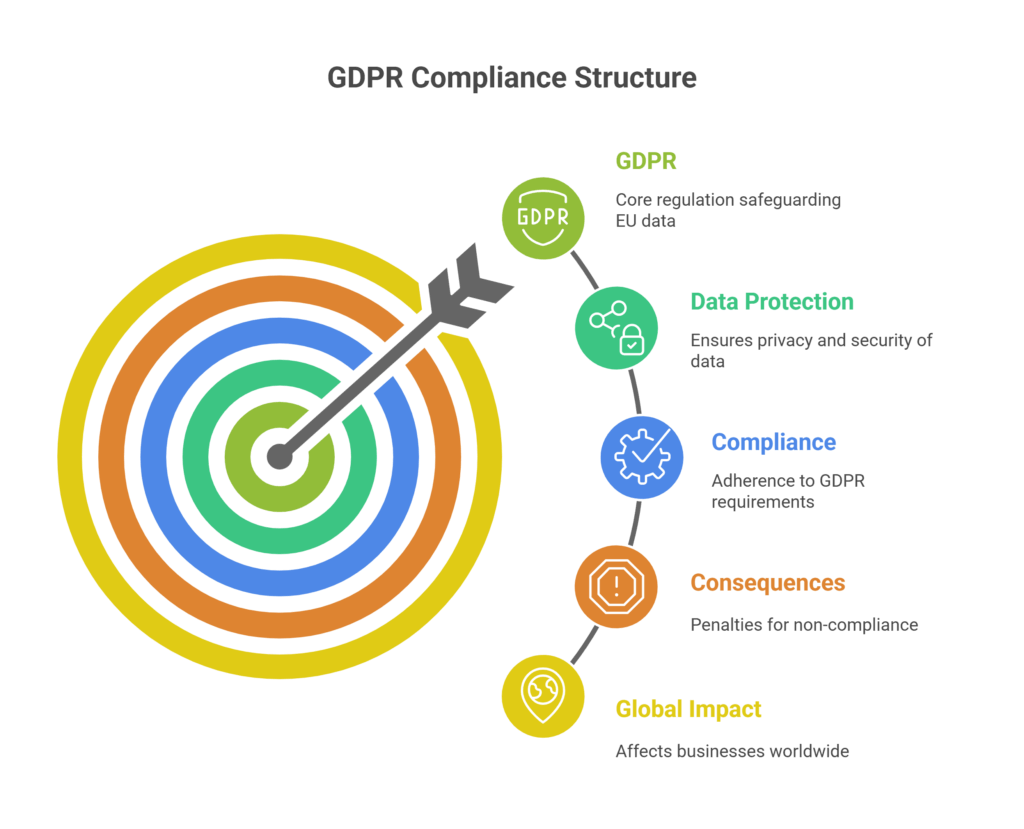
In simple terms, GDPR is a regulation that safeguards the privacy and personal data of EU citizens. It stipulates how businesses have to gather, process, retain, and protect personal information. It is an EU law, but the regulation runs to cover any business, regardless of where it has its headquarters, that transacts data about individuals in the EU.
What does this mean to US firms? Well, if you’re collecting data from EU residents, GDPR compliance in the US is no longer optional. Failing to comply with it may result in large penalties and the ruination of reputation. It is therefore important that you learn to move fast with the contents of how the GDPR operates, particularly should you be in a move to expand your services/products to the European markets, or if you already have customers in the EU.
How Does GDPR Apply to US Businesses?
Here is where it is a little tricky. The GDPR has what is referred to as extraterritorial scope; in other words, it can cover any business that handles the personal data of EU residents, irrespective of where the business itself is located. This is to say, that as long as you are a US-based business and provide services or sell goods to EU citizens (internet present or otherwise), or you even gather insights on their online activities (example, cookies, analytics, etc), then you are subject to the GDPR.
Key GDPR Compliance Requirements for US Businesses
As we have learned that the GDPR does not only apply to the EU, we should review the key requirements of compliance that US enterprises must pay attention to.
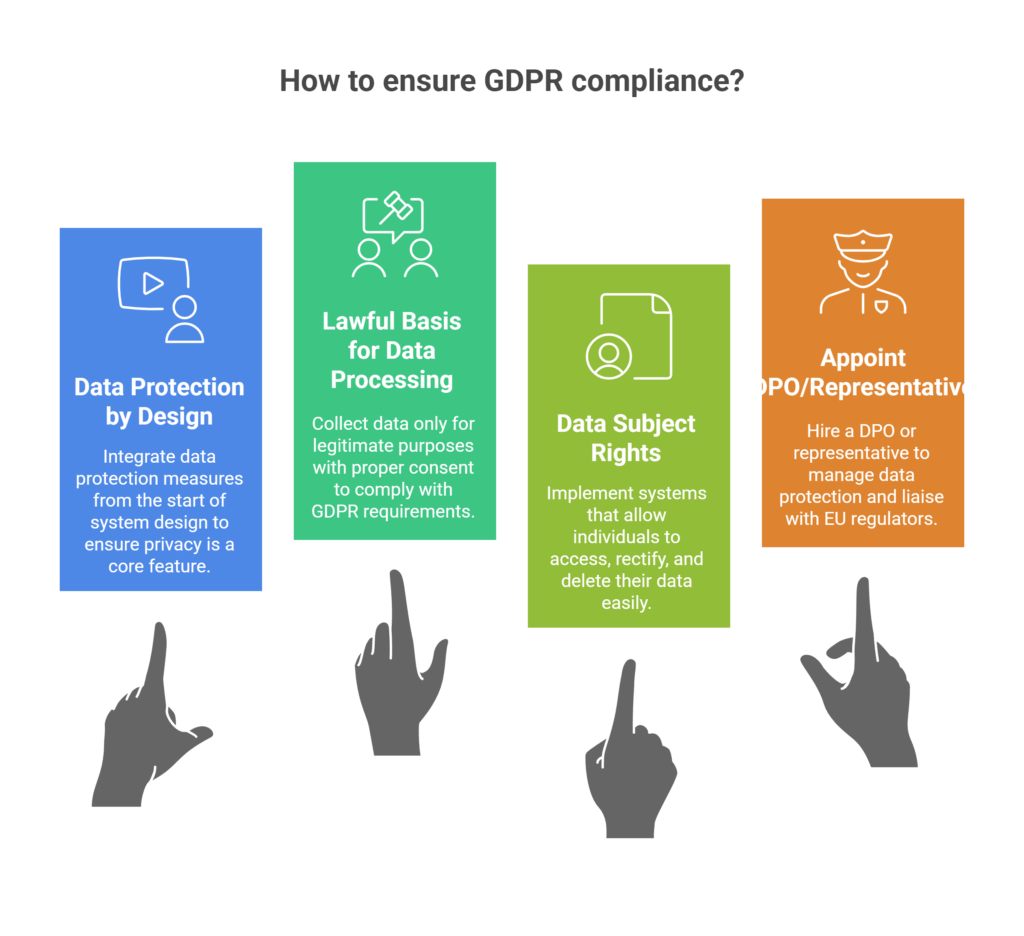
1. Data Protection by default and by design
The GDPR is not only a policy thing; it is about integrating data protection throughout. Data protection, the idea of data protection being by design and default, means that you want your privacy as part of your systems from the beginning. You should not add security as an afterthought; you should rather apply it when designing any system or any product that deals with data.
What it means to you: Whether you are making a new application or service, be sure to add data security measures such as encryption and access restrictions. It is not only a good practice, but a rule stipulated by the GDPR.
2. Lawful Basis for Data Processing
Personal data is something that cannot be gathered at will. The GDPR stipulates that companies must demonstrate a legal purpose for acquiring and using data. This is with or without consent, contract, or even a legal obligation.
Why it matters to you: If collecting that personal data is not essential, then don’t collect it. If it is essential, first make sure you are gathering the data for a legitimate purpose and have an accurate understanding of that purpose. And, finally, ensure you have proper consent in place, in case that is your legal grounding. When it comes to consent, in case you are depending on it, then keep in mind that it must be freely provided, specific, and informed. No more duplicity of the checkbox!
3. Data Subject Rights
GDPR grants people a number of rights concerning their data. These are the right to access their data, the right to rectify their mistakes, the right to delete it (as an abuse of the right to be forgotten), and the right to port their data to another place.
How it applies to you: In the case where you are dealing with EU data, you must have some system where the individuals get familiar with their data or want some changes made. Do not make exercising these rights in the form of unnecessary barriers.
4. Appointing a Data Protection Officer (DPO) or GDPR Representative
You may have to have a Data Protection Officer (DPO) in case you handle sensitive data or process data on a large scale in your business. Although that may not be required, you might be forced to have a GDPR representative in the EU, particularly when you are operating a business that targets citizens of the EU.
How this affects you: As a US business dealing with EU customers, it would be advisable to resolve to employ a DPO or select one to represent you in the EU as a means of regaining compliance and a means of contact with regulators.
What About Cross-Border Data Transfers?
The thing is that GDPR not only governs data processing in the EU but also how data is exported outside of it as well. When transferring EU data to the US (or anywhere outside the EU), the GDPR demands that there are adequate protection measures that seek to protect such data.
How it relates to you: When transferring data to countries outside the EU, to be in compliance, you have to utilize legal measures such as Standard Contractual Clauses (SCCs) or Binding Corporate Rules (BCRs). Privacy Shield Framework, which was once one of the most common ways of data transfer between the EU and the U.S., was overruled in 2020, so it is better to be cautious of that approach.
GDPR Data Storage and Retention Requirements
Among the most frequently asked questions concerning GDPR is the duration that personal data can be stored. The answer? This is subject to what one intends to use the data collection for.
How Long Can Personal Data Be Kept for GDPR?
GDPR requires that personal data should not be retained for a longer time than is required. The companies are required to provide transparency regarding data retention by placing the data retention policies into words so that consumers understand how long the companies will retain their personal information before deleting or anonymizing it.
GDPR Data Retention:
The companies ought to determine a retention period of a particular type of personal data, depending on the legitimate reason, such as a legal requirement, by fulfilling a contract, or consent. After the period that data is to be retained has elapsed, it should be destroyed or pseudonymised.
GDPR Data Retention Requirements:
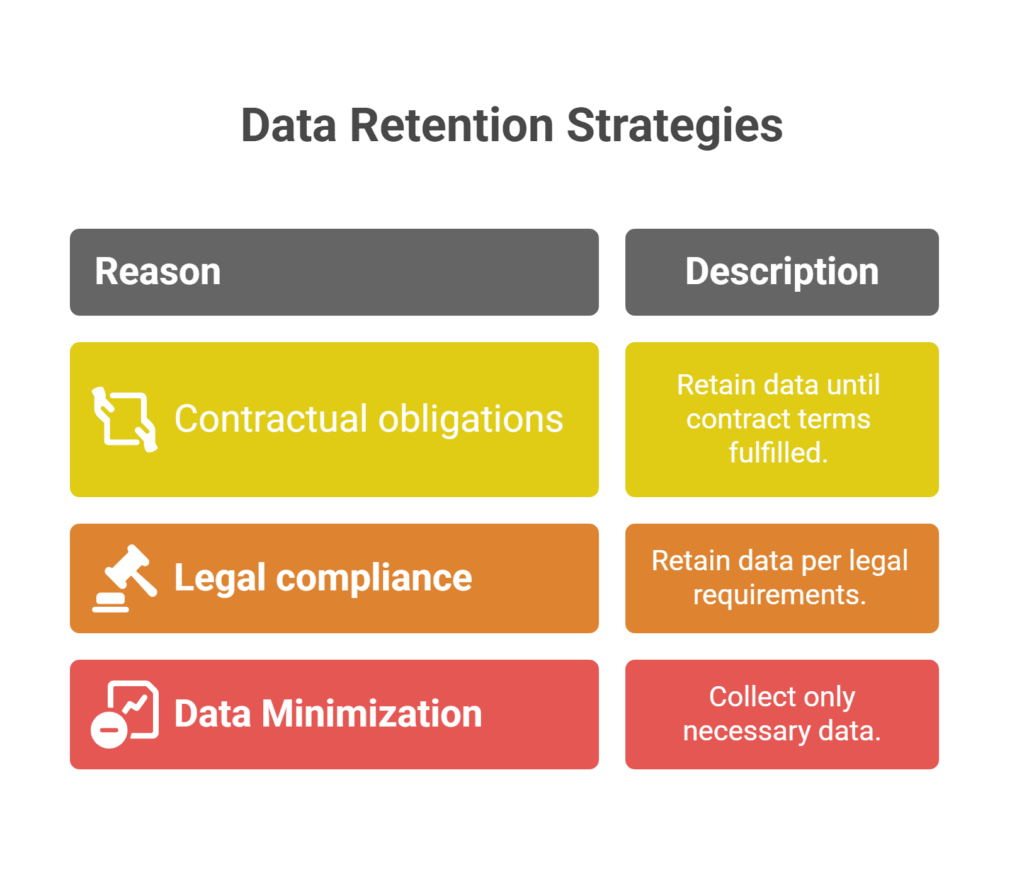
- Contractual obligations: Personal data in contracts will be retained until they will be needed to cover what is in the contract.
- Legal compliance: Depending on the nature of some data, such as financial or health-related information, it may be required to be retained according to a certain time frame because of legal stipulations.
- Data Minimization: GDPR encourages you not to collect as much data as possible. Then care only to have what you want!
How this applies to you: US businesses that handle EU residents’ data should regularly review their data retention policies to ensure they comply with the GDPR data retention requirements. Learn what the retention period of various kinds of data is by regulations dictated by a specific industry.
GDPR Retention Requirement
According to the GDPR, personal information is not to be retained any longer than is required for the achievement of the reasons why such data was likely captured. After personal data is no longer required to serve its original purpose, it must be either destroyed, anonymized, or archived.
How long is too long?
The retention of data is dependent on the nature of the data and the intended use of such data. Certain sectors (such as finance or healthcare) may need a longer retention period than others, which may simply need to store it for the short term.
How this applies to you: Understand the GDPR retention requirement for your industry. Monitor retention times and make sure your storage database falls into the strict timeframes of GDPR.
Practical Tools for GDPR Compliance
If you’re serious about GDPR compliance in the US, here are a few practical steps you can take right now to protect your business and your customers:
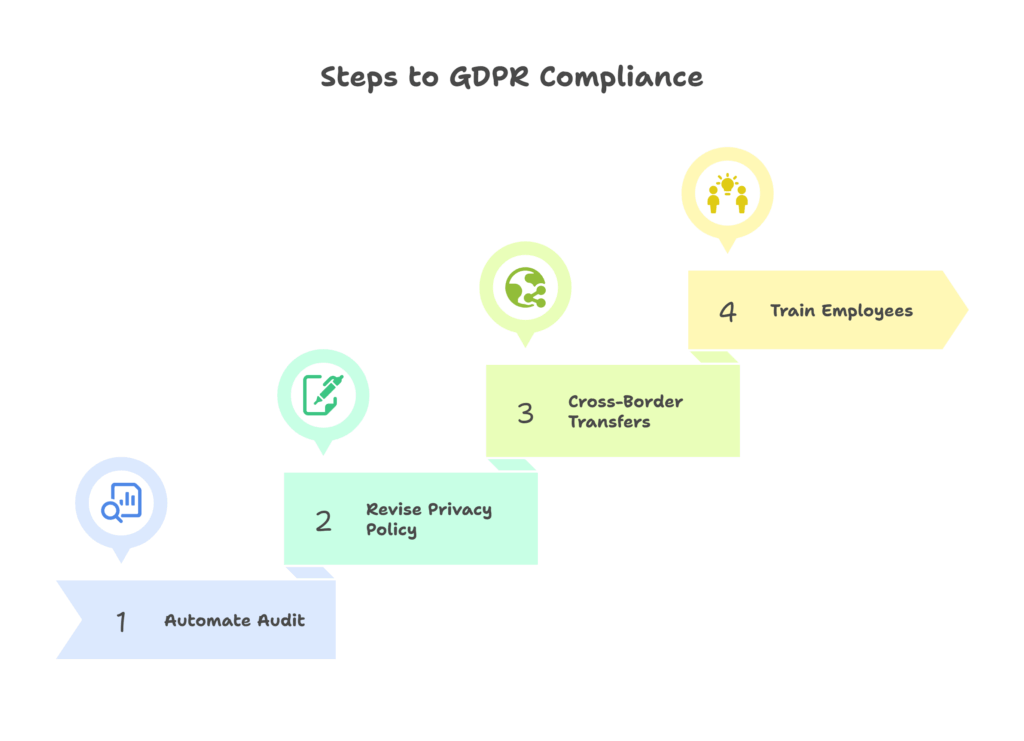
- Automate Audit: First, audit the data you are gathering. What type of personal information do you keep? What are you keeping it so long? Do you have records of consent? It is a very important step in the process of becoming GDPR-compliant.
- Revise Your Privacy Policy: The privacy policy must be open and obvious regarding the processing of personal data. Making sure it contains information on how long you hold the data and what your legal basis of data processing is, and what rights the users have.
- Cross-Border Transfers: Remember that, with personal data, you may want to transfer the data out of the EU, and in doing so, you should ensure you have appropriate legal mechanisms in place. This may be revitalized by way of revising contracts or putting SCCs into place.
- Training Employees: Ensure that your employees are informed of GDPR compliance and data protection principles. This is of importance in safeguarding your business and gaining customer trust.
Real-World Examples of GDPR Non-Compliance
It is not only a question of legal penalties when it comes to non-compliance with the GDPR; it is about loss of trust. The penalty of 50 million euros as of 2019 that the French Data Protection Authority (CNIL) imposed on Google provides a nice example of such. Failure to show enough transparency in the way personalized ads are given consent carries a 50 million euro financial penalty. Equally, British Airways received a penalty of 183 million pounds last year after information of 500,000 clients was exposed.
The severity of GDPR compliance and the issues non-compliance can cause to a brand can be seen in these cases.
Navigating US-Specific Privacy Laws
Along with the GDPR, US companies should keep in mind home-state and industry privacy laws. Privacy laws such as the California Consumer Privacy Act (CCPA) are also becoming popular, and they provide similar privacy protections to those of GDPR. Although these US laws are similar in certain aspects, they bring out the significance of data privacy.
How this applies to you: While GDPR compliance in the US is non-negotiable for businesses dealing with EU data, staying compliant with US-specific regulations is equally important. Monitor any new privacy legislation at the state and federal levels, as it might affect your process of managing personal data.
Conclusion
GDPR compliance in the US can seem like a daunting task, but it’s crucial for any business that processes EU residents’ data. After being aware of the major aspects of the regulation, such as cross-border data transfers, data storage, and retention, US companies will be able to shape strategies to comply with the requirements of the GDPR. It is not enough to remain compliant to avoid paying fines and earn the customers’ trust, as well as retain the highest levels of data protection.
That means that if you process EU data, it is high time to audit your mechanisms, revise your policies, and take charges of GDPR compliance seriously. Your (and the regulators) customers will be thanking you!
FAQs on GDPR Compliance
1. What is GDPR Compliance in the US?
GDPR compliance in the US refers to the adherence of US businesses to the General Data Protection Regulation (GDPR), which safeguards the personal data and privacy of EU citizens. The regulation is used on any US-based company that processes or amasses data about EU citizens, irrespective of the location of the business.
2. What are the GDPR data storage rules in the US?
GDPR is a restrictive law in the manner of data storage and security. US companies are obliged to make sure that personal data is stored in a secure and encrypted form available only to authorized persons. Data storage policies should adhere to the provisions of GDPR, meaning that the data should be stored only until it is no longer necessary to address the purpose.
3. How long can personal data be kept for GDPR compliance?
GDPR implies that personal data should not be stored more than it takes to pursue the purpose of data gathering. Businesses must establish clear data retention periods and ensure that once data is no longer required, it is deleted or anonymized according to GDPR data retention guidelines.
4. What is the GDPR retention requirement for data in the US?
The GDPR retention requirement mandates that personal data should only be retained for as long as it is necessary to fulfill its intended purpose. Upon the expiry of this time, data must be disposed of securely or rendered anonymous, or retained in the archive. Companies ought to determine whether they require storage of data or not and ensure that they abide by GDPR classification regulations concerning data retention.
5. What happens if a business fails to comply with GDPR data retention requirements?
Noncompliance with the regulation of GDPR concerning data retention can also incur hefty penalties, such as loss of reputation for the business. The non-compliance is described by punishments amounting to 4% of annual global turnover or 20 million Euro.

 By
By
 By
By