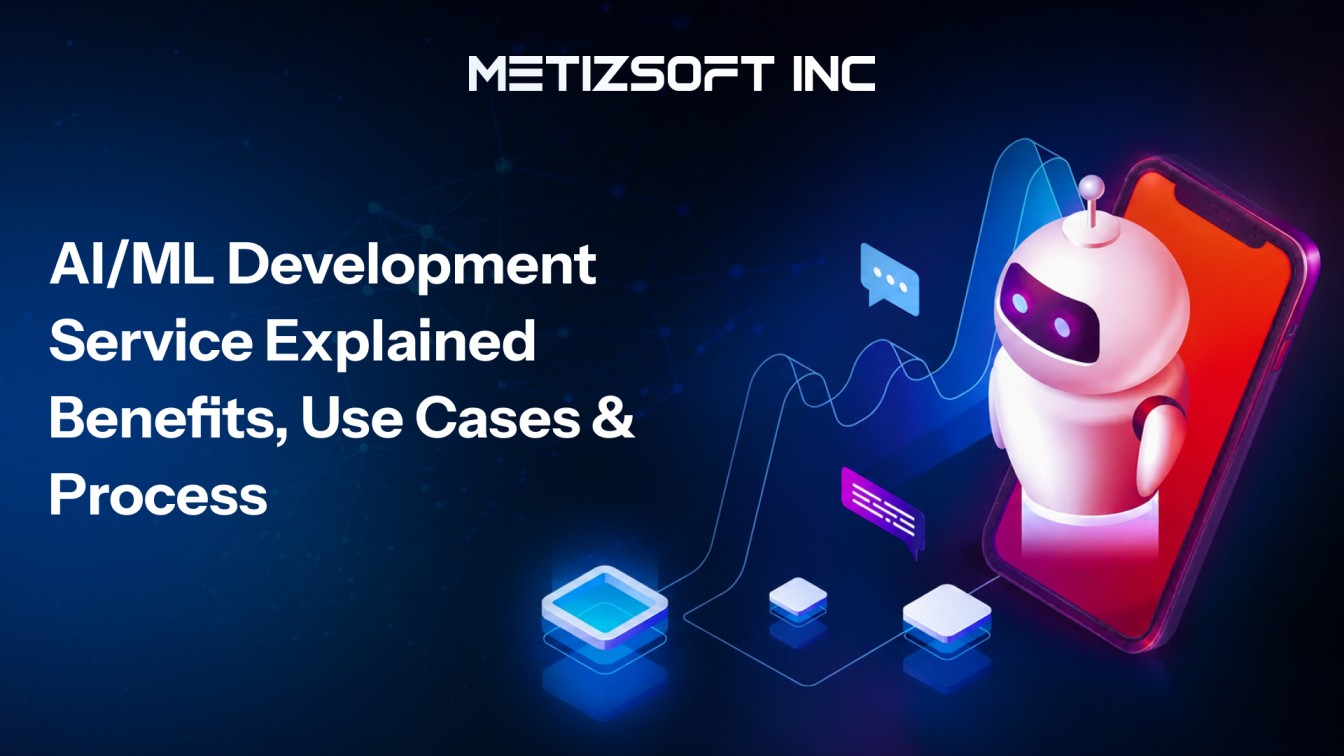

What is an AI/ML Development Service and Why It Matters
Businesses today rely heavily on data to make informed decisions. With increasing competition, companies need smarter systems that can process large volumes of information quickly and accurately. Traditional systems are no longer enough to meet modern business demands. This is where an AI/ML Development Service becomes highly valuable.
An AI/ML Development Service focuses on building intelligent systems that can learn from data and improve over time. These systems use algorithms to identify patterns, automate processes, and generate insights that support decision-making. Instead of relying on manual analysis, businesses can use machine learning models to handle complex tasks efficiently.
These services are used across industries to improve productivity and reduce errors. They help organisations optimise workflows, enhance customer experience, and gain a competitive advantage. As data continues to grow, the importance of intelligent systems will only increase.
Key overview:
- Data-driven automation that reduces manual work
- Smarter decision-making based on real insights
- Improved efficiency across business operations
- Scalable solutions that grow with the business
Core Components of an AI/ML Development Service
Developing intelligent systems involves multiple components that work together to deliver accurate and reliable results. Each component plays a critical role in the overall success of the solution.
The first step is data collection and preparation. High-quality data is essential for building effective models. This includes cleaning, structuring, and organising data so that algorithms can learn efficiently. Poor data quality can lead to inaccurate predictions and unreliable outputs.
The next step is model development and training. Algorithms are trained using datasets to identify patterns and relationships. Once trained, models are tested to ensure accuracy and performance. After testing, the solution is deployed into a real environment where it can be used in practical applications.
Continuous monitoring and improvement are also important. Models need to be updated regularly to maintain accuracy as new data becomes available.
Main components:
- Data collection, cleaning, and preparation
- Model training and validation
- Deployment into real-world systems
- Continuous monitoring and optimisation
Key Benefits of an AI/ML Development Service
Implementing intelligent systems offers several advantages for businesses. It improves efficiency, reduces costs, and enhances overall performance. These benefits make AI adoption a strategic investment.
One of the main advantages is automation. Businesses can automate repetitive and time-consuming tasks, allowing employees to focus on more important activities. This increases productivity and reduces operational costs.
Another benefit is improved accuracy. Machine learning models reduce human errors by processing data consistently. This leads to better outcomes and more reliable results.
Scalability is also a major advantage. AI systems can handle large volumes of data without additional resources. This allows businesses to grow without increasing operational complexity.
Key benefits:
- Increased efficiency and productivity
- Reduced operational costs
- Improved accuracy and reliability
- Scalable and flexible solutions
Automation with AI/ML Development Service
Automation is one of the most powerful features of intelligent systems. It allows businesses to streamline operations and reduce dependency on manual processes. Tasks such as data entry, reporting, and customer interactions can be automated easily.
Automation not only saves time but also improves consistency. Processes are executed in the same way every time, reducing errors and improving quality. This leads to better operational efficiency and faster outcomes.
Automation benefits:
- Faster execution of repetitive tasks
- Reduced manual errors
- Consistent and reliable performance
Data Insights using AI/ML Development Service
Data insights are essential for making informed decisions. Intelligent systems analyse large datasets to identify trends and patterns. This helps businesses understand customer behaviour, market trends, and operational performance.
These insights enable better planning and strategy. Businesses can predict future outcomes and make proactive decisions. This reduces risks and improves overall efficiency.
Insight benefits:
- Accurate forecasting and predictions
- Better strategic planning
- Improved decision-making
Customer Experience via AI/ML Development Service
Customer experience is a key factor in business success. Intelligent systems help personalise interactions and improve engagement. Businesses can provide tailored recommendations and faster responses to customer queries.
Tools like chatbots and recommendation engines enhance user satisfaction. This leads to higher retention rates and improved brand loyalty.
Customer benefits:
- Personalised customer interactions
- Faster response times
- Improved engagement and satisfaction
Growth Opportunities with AI/ML Development Service
AI enables businesses to explore new opportunities and expand their capabilities. It supports innovation by allowing organisations to develop new products and services.
Businesses can also adapt quickly to changing market conditions. This flexibility ensures long-term growth and sustainability.
Growth benefits:
- Support for innovation
- Ability to adapt to market changes
- Long-term business growth
Real-World Use Cases Across Industries
AI is widely used across industries to solve real-world problems. It helps organisations improve efficiency, reduce costs, and deliver better services.
In healthcare, AI supports diagnosis and patient monitoring. It helps doctors make accurate decisions and improve patient outcomes. In finance, AI is used for fraud detection and risk management. It identifies suspicious activities and prevents financial losses.
Retail businesses use AI for personalised recommendations and inventory management. Manufacturing industries use it for predictive maintenance and process optimisation.
Common use cases:
- Healthcare analytics and diagnosis
- Financial fraud detection
- Retail personalisation and forecasting
- Manufacturing automation
Step-by-Step Development Process
Developing intelligent systems requires a structured and well-defined process. Each step ensures that the final solution meets business requirements and performs effectively.
The process begins with requirement analysis. This step defines business goals and identifies the problem to be solved. Next is data preparation, where relevant data is collected and cleaned.
Model development follows, where algorithms are trained and tested. After testing, the solution is deployed into real systems. Continuous monitoring ensures that the system performs well over time.
Development steps:
- Requirement analysis and planning
- Data collection and preparation
- Model development and testing
- Deployment and continuous improvement
Importance of Data Security and Compliance
Data security is a critical aspect of AI development. Businesses must ensure that user data is protected and handled responsibly.
Using GDPR Compliance Solutions helps organisations meet legal requirements and maintain trust. It ensures that data privacy is maintained and risks are minimised.
Secure systems improve reliability and protect sensitive information. This is essential for long-term success.
Security benefits:
- Protection of sensitive data
- Compliance with regulations
- Increased user trust
- Reduced security risks
Comparison Table: Traditional vs AI-Based Systems
Understanding the difference between traditional and intelligent systems helps businesses make better decisions.
| Feature | Traditional Systems | AI-Based Systems |
| Decision Making | Manual | Automated |
| Efficiency | Limited | High |
| Scalability | Low | High |
| Accuracy | Moderate | Advanced |
| Adaptability | Fixed | Learning-based |
Role of Prototyping in AI Projects
Prototyping is an essential step in AI development. It allows businesses to test ideas before full-scale implementation. This reduces risks and improves planning.
Using an MVP Development Service helps create a basic version of the solution. This version can be tested and improved before final deployment. It saves time and cost while ensuring better results.
Prototyping also helps identify potential issues early. This ensures smoother implementation and better performance.
Prototype benefits:
- Faster validation of ideas
- Reduced development risks
- Cost-effective approach
- Improved final outcomes
Why Choose Metizsoft Inc
Selecting the right development partner is important for successful implementation. A reliable partner ensures better results and long-term success.
Metizsoft Inc provides customised AI solutions tailored to business needs. Their team focuses on delivering scalable and efficient systems. They follow structured processes to ensure quality and performance.
Their expertise helps businesses implement intelligent systems effectively. This leads to improved outcomes and better growth opportunities.
Why choose them:
- Experienced professionals
- Customised solutions
- Reliable support
- Scalable development
Common Challenges in AI Implementation
AI implementation comes with challenges that businesses must address. Understanding these challenges helps in better planning and execution.
Data quality is one of the biggest challenges. Poor data leads to inaccurate results. Integration with existing systems can also be complex and time-consuming.
There may also be skill gaps within organisations. Lack of expertise can slow down the implementation process. However, these challenges can be managed with proper strategy and support.
Common challenges:
- Poor data quality
- Integration difficulties
- High initial investment
- Lack of skilled resources
Expert Tips for Successful AI Adoption
Adopting AI requires careful planning and execution. Businesses should start with clear goals and objectives.
Using high-quality data improves results and accuracy. Continuous monitoring ensures that systems perform effectively.
Working with experienced professionals helps reduce risks and improve outcomes. This ensures successful implementation.
Expert tips:
- Define clear objectives
- Use quality data
- Monitor performance regularly
- Partner with experts
Long-Term Value of AI/ML Development Service
Investing in intelligent systems ensures long-term growth, efficiency, and innovation.
Business Impact of AI Integration
AI integration transforms business operations and improves efficiency. It helps organisations make better decisions and optimise processes.
Businesses can scale operations without increasing costs. This leads to improved profitability and growth. AI also supports innovation and new opportunities.
Key impact:
- Increased productivity
- Better decision-making
- Improved scalability
- Higher profitability
Frequently Asked Questions
What is AI/ML development?
It is the process of building intelligent systems using data.
Who can use these services?
Businesses of all sizes can benefit from intelligent solutions.
Is implementation costly?
It depends on the project scope and complexity.
How long does development take?
It varies based on requirements and data availability.
Conclusion
An AI/ML Development Service helps businesses improve efficiency, accuracy, and innovation. It enables smarter decisions and better outcomes.
With the right partner like Metizsoft Inc, organisations can successfully adopt AI and achieve long-term growth.

 By
By
 By
By